

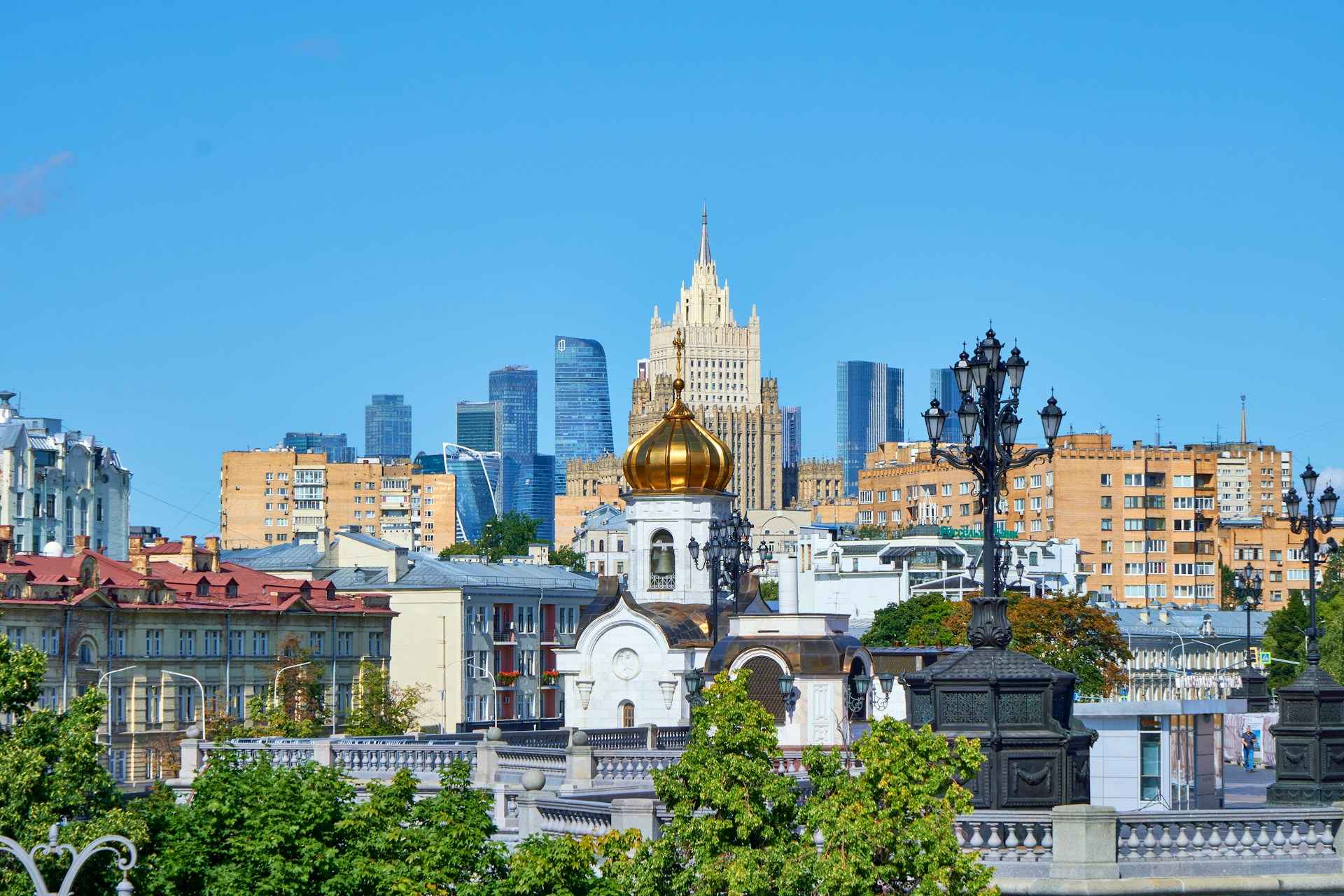
Are you wondering what makes Moscow one of the most captivating capital cities in the world and whether this magnificent metropolis deserves a spot on your travel bucket list? Stretching across the Moskva River with its golden domes, grand palaces, and modern skyscrapers, Moscow has captured the hearts of millions of travelers worldwide. Often called the “Third Rome” due to its historical significance and Orthodox heritage, this Russian capital offers dramatic imperial architecture, world-class cultural experiences, legendary metro stations, and a fascinating blend of Soviet history and contemporary innovation that makes it one of Europe’s most exciting destinations.
In this comprehensive Moscow travel guide, we’ll explore the best things to do in Moscow and why this extraordinary city should be your next vacation destination.
What is Moscow? Quick Overview
Moscow is the capital and largest city of Russia, with a population of over 12 million people, making it the biggest city in Europe. Founded in 1147, this ancient city has served as the heart of Russian culture, politics, and economics for centuries. The city spans approximately 2,500 square kilometers along the banks of the Moskva River, offering incredibly diverse experiences from medieval monasteries to futuristic skyscrapers, from world-renowned museums to underground palace-like metro stations.
Thanks to its excellent connections from major global cities—just 3-4 hours from most European capitals and direct flights from cities across Asia, the Middle East, and beyond—visiting Moscow has become increasingly accessible. The city combines rich Russian heritage, stunning architectural beauty, and modern urban infrastructure, making it perfect for all types of travelers—from history enthusiasts and culture lovers to architecture admirers and those seeking unforgettable metropolitan experiences.
Best Things to Do in Moscow – Must-Visit Attractions and Experiences
Red Square and St. Basil’s Cathedral – Moscow’s Iconic Heart
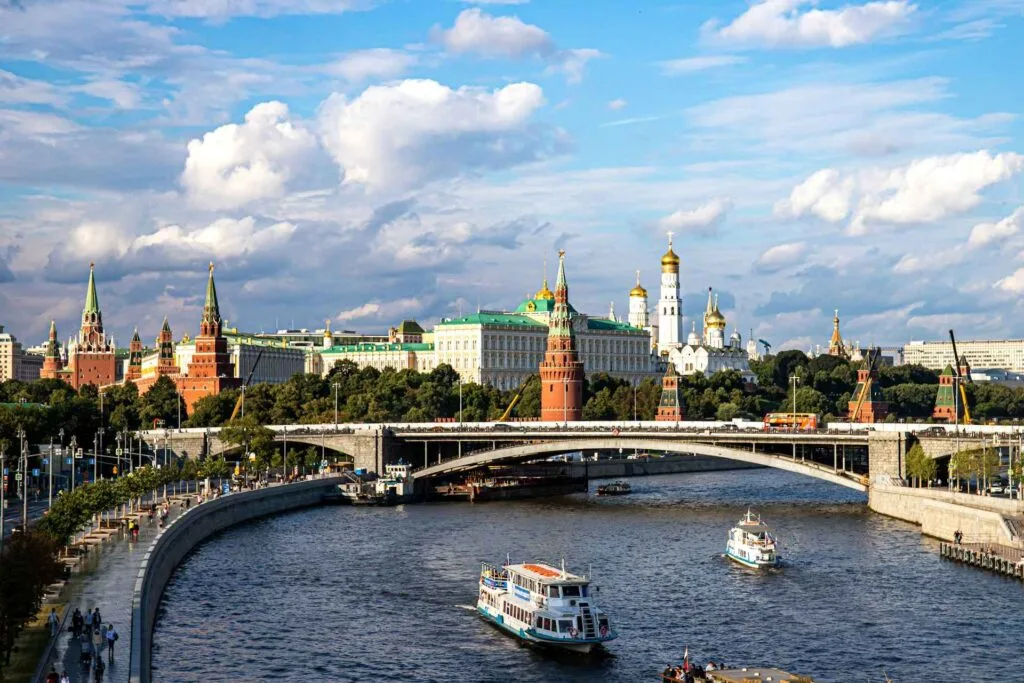
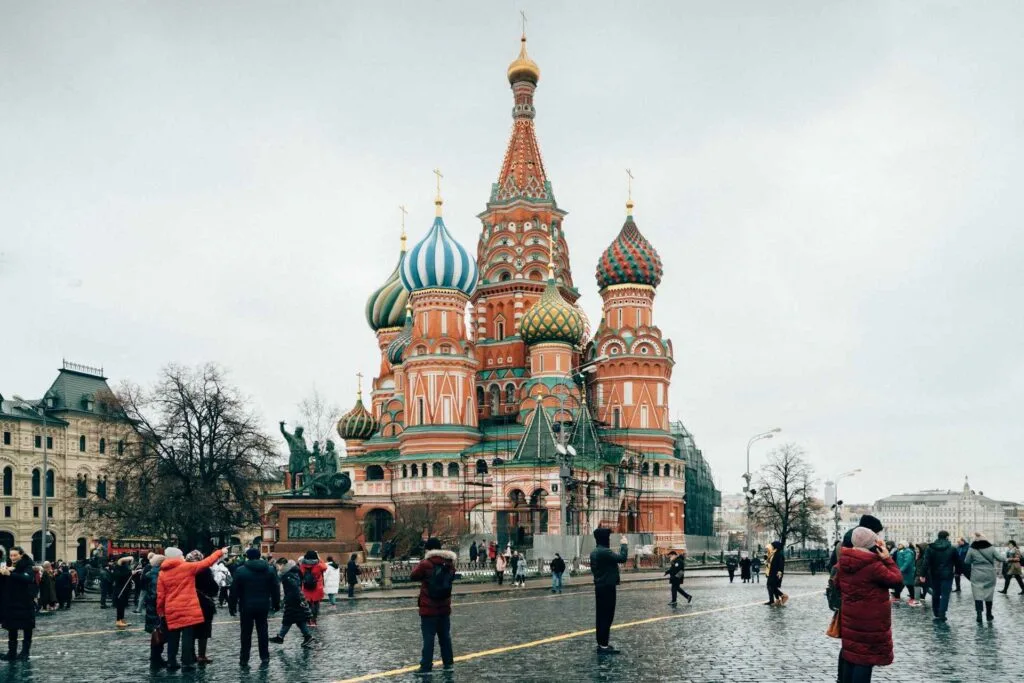
Perhaps nothing defines Moscow more than Red Square and the impossibly colorful St. Basil’s Cathedral that adorns it. As the most famous square in Russia and one of the most recognizable landmarks on Earth, Red Square sits at the absolute heart of Moscow and serves as the city’s emotional and geographical center.
The History Behind Red Square
Red Square was established in the late 15th century when Ivan III ordered the area in front of the Kremlin walls to be cleared to create a marketplace and public gathering space. The name “Red Square” doesn’t come from communism or the red Kremlin walls as many assume—in Old Russian, the word “krasnaya” meant both “red” and “beautiful,” and the square was originally called “Beautiful Square” centuries before Soviet times.
Red Square stands as Moscow’s central and most iconic landmark, surrounded by famous sites including the Kremlin, St. Basil’s Cathedral, and GUM Department Store, serving as a vibrant hub where major events, parades, and festivals are celebrated Express to Russia. Throughout Russian history, the square has witnessed coronations, public announcements, military parades, and pivotal historical moments that shaped the nation.
St. Basil’s Cathedral – A Fairytale Vision
St. Basil’s Cathedral is undoubtedly Moscow’s most photographed building and one of the world’s most distinctive architectural masterpieces. Built between 1555 and 1561 by Ivan the Terrible to commemorate the capture of Kazan, the cathedral’s explosion of colorful onion domes, swirling patterns, and asymmetrical design creates a structure that looks like it emerged from a children’s storybook.
Legend says that Ivan the Terrible was so impressed by the cathedral’s beauty that he had the architects blinded to ensure they could never create anything to rival it. While this story is likely apocryphal, it speaks to the building’s extraordinary visual impact. Each of the nine colorful domes represents a church dedicated to a saint, and the interior—surprisingly dark and maze-like—creates a dramatic contrast with the vibrant exterior.
What Makes Red Square Special:
Standing in Red Square, particularly at night when St. Basil’s Cathedral is illuminated in a spectacular display of colors, ranks among the most magical experiences in all of Russia. The enormous scale of the square, the red Kremlin walls rising on one side, the ornate State Historical Museum at the northern end, and the elegant GUM Department Store lining the eastern side create a space of almost overwhelming grandeur.
Lenin’s Mausoleum and the most notable department store of USSR called GUM are just some of the additional attraction points you’ll find here Viacation. GUM, despite being built in the 1890s as a trading center, remains one of Europe’s most beautiful shopping arcades, with its glass roof, three levels of boutiques, and elegant architecture worth visiting even if you’re not shopping.
Top Experiences at Red Square:
Visit at different times of day—early morning before crowds arrive offers peaceful photography opportunities, while evening illumination creates magical atmosphere
Attend the Changing of the Guard ceremony at Lenin’s Mausoleum (when open to visitors)
Explore GUM Department Store’s elegant interiors and historic ice cream stand (a Soviet-era tradition)
Winter visits transform the square with elaborate ice skating rinks and New Year’s decorations
Experience major Russian holidays when military parades and celebrations fill the square
Pro tip for visitors: Visit Red Square multiple times during your Moscow stay—seeing it transition from morning light to nighttime illumination gives you completely different perspectives on this extraordinary space.
The Moscow Kremlin – Power, History, and Architectural Splendor
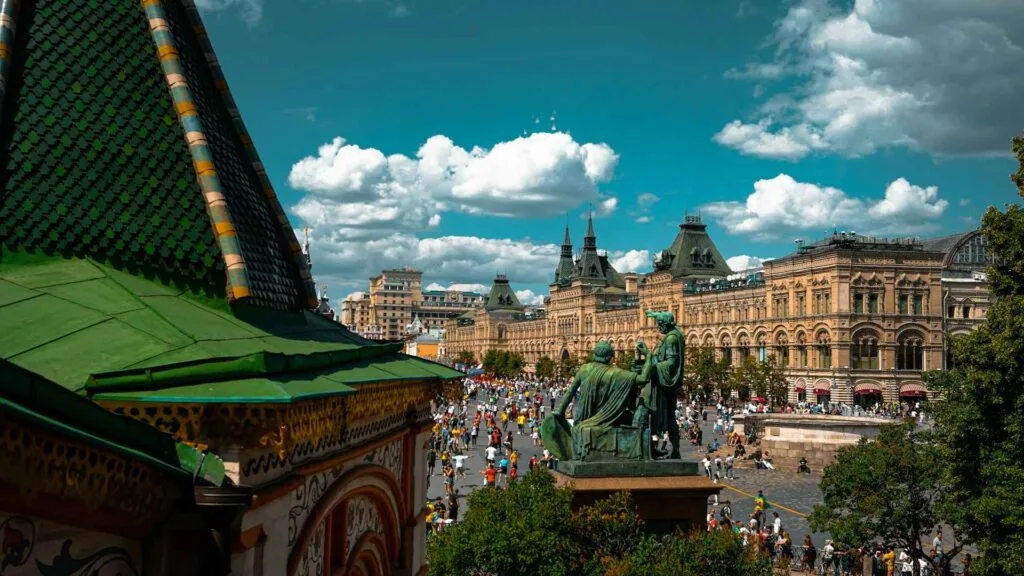
The Kremlin is far more than just Russia’s seat of government—it’s a living museum of Russian history, an architectural wonder, and the symbolic heart of the nation. The word “kremlin” simply means “fortress,” and while several Russian cities have kremlins, Moscow’s is by far the most famous and significant.
Understanding the Kremlin Complex
Enclosed within massive red brick walls spanning 2.25 kilometers and punctuated by 20 towers, the Moscow Kremlin covers 27 hectares of prime riverside land. The current walls were built in the late 15th century, replacing earlier wooden and white stone fortifications, and have witnessed over 500 years of Russian history unfold within and around them.
Explore The Grand Kremlin Palace that was constructed as permanent Moscow residence for the emperor’s family when the capital of Russia was located in Saint Petersburg. You can often see its magnificent reception halls on TV during major official events including the president’s inauguration Viacation.
What Visitors Can See Inside the Kremlin:
Cathedral Square: The heart of the Kremlin features four stunning cathedrals built in the 15th and 16th centuries. The Cathedral of the Assumption (Dormition) served as the coronation site for Russian tsars and remains the most important Orthodox church in Russia. The Cathedral of the Archangel contains the tombs of Russian rulers from the 14th through 17th centuries. The Cathedral of the Annunciation served as the private chapel of the royal family. Each cathedral is adorned with priceless frescoes, icons, and historical treasures.
Ivan the Great Bell Tower: This 81-meter tall bell tower dominates the Kremlin skyline and contains the world’s largest bell—the Tsar Bell, weighing over 200 tons, which cracked during casting and has never been rung. Nearby sits the massive Tsar Cannon, cast in 1586 and weighing 40 tons, among the largest cannons ever made.
The Armory Chamber: Perhaps the Kremlin’s greatest treasure trove, this museum houses an extraordinary collection of royal regalia, Fabergé eggs, coronation robes, thrones, imperial carriages, weapons, and state gifts spanning centuries. The craftsmanship and historical significance of the items on display are absolutely breathtaking.
Kremlin Gardens and Grounds: Beautifully maintained gardens provide peaceful walking areas between the grand buildings, offering excellent photography opportunities with the golden domes rising above manicured lawns.
Essential Visiting Information:
Tickets must be purchased in advance or at specific ticket offices; security is stringent with airport-style screening
Separate tickets required for Cathedral Square, Armory Chamber, and temporary exhibitions
Large bags are not permitted; storage facilities available outside
Allow 3-4 hours minimum to properly explore the Kremlin complex
Guided tours highly recommended to understand the historical significance of what you’re seeing
The Kremlin’s Continuing Role: What makes the Kremlin unique among world heritage sites is that it remains an active government center. The working residence of Russia’s president is located within the walls (this section is closed to tourists), creating the fascinating juxtaposition of ancient churches, museums, and contemporary political power all existing within the same fortified complex.
Moscow Metro Stations – The World’s Most Beautiful Underground Palaces
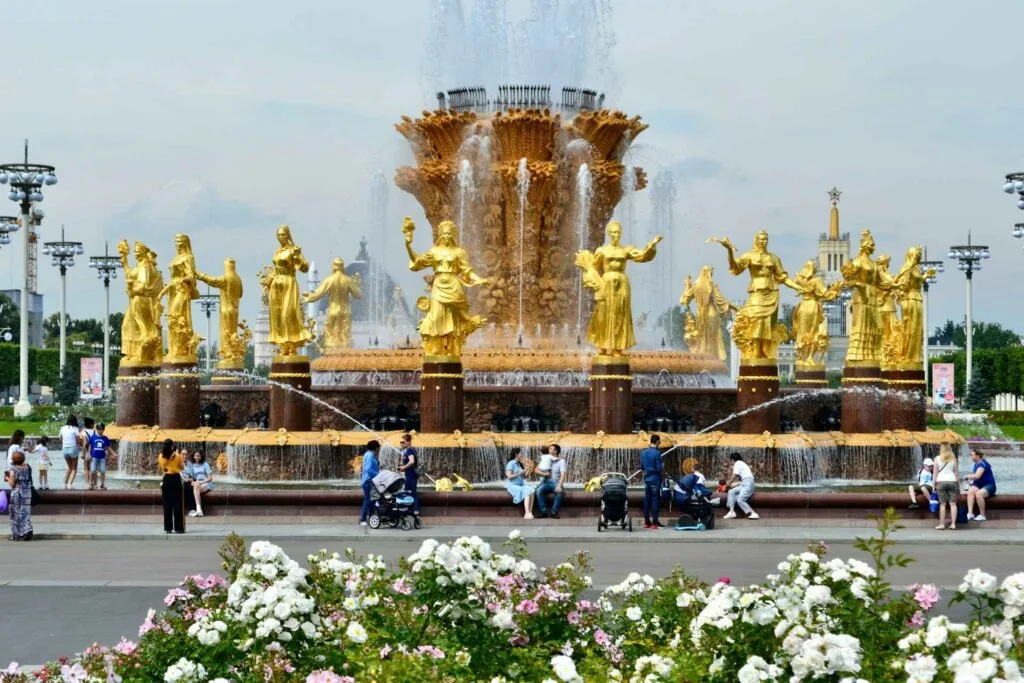
If there is one experience that consistently amazes first-time Moscow visitors, it’s riding the Moscow Metro. While metros in other cities are purely functional transport systems, the Moscow Metro is considered a tourist attraction in itself and one of the best things to do in Moscow, with many stations adorned like grand halls, complete with marble, mosaics, sculptures, and chandeliers Time Out.
The History Behind Moscow’s Palatial Metro
The first project of Moscow metro was created in 1901 but the first line – Sokolnicheskaya (line 1, red) – was opened only on 15th May 1935. The most beautiful line is Koltsevaya (the circle line 5, brown on the map), built in years 1950-1954 Quora.
Stalin conceived the Moscow Metro as a showcase of Soviet achievement—a “people’s palace” where ordinary citizens would experience beauty and grandeur in their daily commute. Architects and artists were commissioned to create spaces of exceptional beauty, using marble quarried from across the Soviet Union, elaborate mosaics celebrating industry and progress, sculptures of workers and soldiers, and massive chandeliers that would look at home in imperial palaces.
Why Moscow Metro Stations Are Extraordinary
As of 2021, the Moscow Metro has grown to include 241 stations. Nearly 10 million people commute on the Moscow Metro each day making it one of the most heavily used systems in the world and the busiest metro system in Europe Time Out. What’s remarkable is that despite this utilitarian function, the stations remain architectural masterpieces.
44 of the stations are listed as the places of Russian cultural heritage. Even if Moscow metro stations are similar in a way they all are different, even if sometimes little details distinguish them Quora.
Top Moscow Metro Stations You Must Visit:
Komsomolskaya Station (Ring Line): Perhaps the most opulent metro station in Moscow, Komsomolskaya features soaring baroque yellow ceilings adorned with elaborate mosaics depicting Russian military victories and achievements. Enormous chandeliers descend from the vaulted ceiling, and every surface seems to gleam with marble and gold accents. The station serves three major Moscow railway terminals, making it perpetually busy, but the overwhelming grandeur stops visitors in their tracks.
Mayakovskaya Station (Green Line): Opened in 1938, Mayakovskaya is full of secrets. Its metal-rimmed arches let you test the laws of physics for yourself: roll a coin across the top of one arch, and it’ll drop down on the opposite side Quora. The station features Art Deco design with stainless steel arches, pink rhodonite marble, and oval ceiling mosaics depicting “A Day in the Land of the Soviets.” The futuristic design was so acclaimed it won the Grand Prize at the 1939 World’s Fair in New York.
Novoslobodskaya Station (Ring Line): Built after World War II in 1952, Novoslobodskaya is unlike anything else in the metro. It looks like a Gothic cathedral, with 32 illuminated stained-glass panels — each one unique. One wall is dominated by a huge mosaic titled Peace Throughout the World — a popular backdrop for selfies among both locals and visitors Time Out.
Ploshchad Revolyutsii Station (Blue Line): Ploshchad Revolyutsii is devoted to the Bolshevik Revolution of 1917, and has 76 bronze statues that depict its main participants: soldiers, peasants, sailors, workers, engineers, students and many others Aviation A2Z. A local superstition claims that rubbing the nose of the bronze dog in the “Border Guard with Dog” statue brings good luck, which is why this particular dog’s nose is polished to a bright shine by thousands of daily touches.
Kievskaya Station (Ring Line): The winning design focused the station’s theme on the Russo-Ukrainian unity, evident in the large, bright mosaics throughout the station. Stark white granite and marble arches accented with gold flourishes lit by central chandeliers against the bold mosaics is almost overwhelmingly elaborate Time Out.
Arbatskaya Station (Blue Line): Opened in 1953, Arbatskaya is set in the very heart of Moscow — within walking distance of the Kremlin, Red Square, and the Arbat pedestrian street. The station itself is long and often busy. Nevertheless, it’s easy to get lost in the beauty of its snow-white arches, elaborate plasterwork, antique bronze chandeliers, and crimson marble accents Time Out.
How to Experience the Moscow Metro:
The trains will get crowded during rush hours from 8AM to 10AM in the morning, and 5PM to 7PM in the afternoon, so it’s best to avoid these times if you want to do some sightseeing at Moscow Metro stations. Sunday will usually be a quiet day, or if you can come as early as 6AM in the morning, the better Xinhua.
Purchase a Troika card for convenient, unlimited metro travel
Download Yandex Metro app for English-language navigation
Plan a “metro tour” visiting 6-8 of the most beautiful stations in 2-3 hours
Bring a camera—photography is permitted in stations (but not on escalators for safety)
Consider a guided metro tour to learn the fascinating history and symbolism behind the designs
Pro tip: The Circle Line (Line 5, brown on maps) contains the highest concentration of spectacular stations and makes an excellent route for metro station exploration, as you can easily hop off, explore, and continue around the circle.
Bolshoi Theatre – World-Class Ballet and Opera
The Bolshoi Theatre stands as one of the world’s most prestigious venues for ballet and opera, synonymous with Russian cultural excellence. The theater’s name literally means “big” or “grand” in Russian, and the institution certainly lives up to its name in every respect—scale, reputation, and artistic achievement.
The History of the Bolshoi:
Founded in 1776, the Bolshoi Theatre has been the home of Russian ballet and opera for over two centuries. The current building, with its magnificent neoclassical façade featuring Apollo’s chariot pulled by four horses, was completed in 1825 and has been meticulously restored following fires, wars, and renovations. The theater reopened in 2011 after a six-year, $700 million restoration that returned it to its original 19th-century splendor while adding modern technical capabilities.
What Makes the Bolshoi Special:
Watching a performance at the Bolshoi ranks among the most memorable cultural experiences available anywhere in the world. The interior is breathtaking—six tiers of red velvet and gold balconies rise around the imperial scarlet and gold auditorium, crystal chandeliers illuminate the space, and the stage is enormous, allowing for spectacular productions that are simply impossible in smaller venues.
The Bolshoi Ballet Company is legendary, producing some of the world’s greatest dancers. Names like Maya Plisetskaya, Galina Ulanova, Rudolf Nureyev, and Mikhail Baryshnikov trained and performed here. Today’s company maintains the highest technical standards while honoring the Russian ballet tradition.
Top Performances to See:
Swan Lake: Perhaps the most iconic Russian ballet, Tchaikovsky’s masterpiece about a princess transformed into a swan is the Bolshoi’s signature production. The combination of the world’s most famous ballet, performed by one of the world’s greatest companies, in one of the world’s most beautiful theaters creates an unforgettable evening.
The Nutcracker: Another Tchaikovsky classic, particularly magical during the December holiday season. The Bolshoi’s production is lavish and traditional, exactly as the composer and original choreographer Marius Petipa envisioned.
Eugene Onegin: For opera lovers, Tchaikovsky’s lyrical masterpiece based on Pushkin’s novel showcases Russian opera at its finest. The Bolshoi’s production is emotionally powerful and musically superb.
Contemporary Works: The Bolshoi also performs modern ballets and contemporary opera, demonstrating that the company isn’t merely a museum of 19th-century works but a living, evolving artistic institution.
Practical Visiting Information:
Book tickets months in advance for major productions—Swan Lake and Nutcracker sell out quickly
Ticket prices range from approximately 1,000 rubles ($15) for upper balcony to 10,000+ rubles ($150+) for orchestra seats
Dress code is smart casual to formal; many Russians dress elegantly for the theater
Arrive early to explore the stunning interior and enjoy the pre-performance atmosphere
Tours of the theater are available when performances aren’t scheduled
Alternative Venues: If Bolshoi tickets are unavailable, Moscow offers other excellent theaters including the Stanislavsky and Nemirovich-Danchenko Musical Theatre and the Moscow Academic Musical Theatre, both offering high-quality ballet and opera at more accessible prices.
Tretyakov Gallery – Russia’s Greatest Art Collection
For art lovers visiting Moscow, the State Tretyakov Gallery is absolutely unmissable. This museum houses the world’s most comprehensive collection of Russian art, with over 180,000 works spanning icon paintings from the medieval period through Soviet-era masterpieces to contemporary works.
The History Behind the Collection:
The gallery was founded by merchant and art patron Pavel Tretyakov, who began collecting Russian art in the 1850s with the vision of creating a national museum accessible to all Russians, not just the wealthy elite. In 1892, Tretyakov donated his entire collection—nearly 2,000 works—to the city of Moscow, creating the foundation of today’s museum.
What Makes the Tretyakov Special:
The collection provides a complete visual history of Russian artistic development. You can trace the evolution of Russian painting from medieval religious icons to the psychological portraits of the 19th century, from the social realism of the Wanderers movement to the avant-garde experiments of the early 20th century, from Socialist Realism of the Soviet period to contemporary post-Soviet art.
Must-See Masterpieces:
Icon Collection: The gallery’s collection of Russian Orthodox icons is unparalleled, including works by the legendary Andrei Rublev. His “Trinity” (1410s) is considered the greatest icon ever painted and ranks among Russia’s most important cultural treasures.
19th Century Realism: Works by Ilya Repin, including the massive historical canvas “Reply of the Zaporozhian Cossacks,” showcase the pinnacle of Russian realist painting. Repin’s psychological portraits reveal the inner lives of his subjects with extraordinary insight.
Russian Avant-Garde: The early 20th century galleries feature revolutionary works by Wassily Kandinsky, Kazimir Malevich, Marc Chagall, and other artists who challenged artistic conventions and helped create modern abstract art.
Landscape Masters: Ivan Shishkin’s detailed forest scenes, Isaac Levitan’s moody atmospheric landscapes, and Arkhip Kuindzhi’s dramatic use of light demonstrate Russian artists’ deep connection to their homeland’s nature.
Practical Information:
The museum has two main buildings—the original Tretyakov Gallery (focused on art before 1917) and the New Tretyakov on Krymsky Val (20th and 21st century art)
Allow minimum 3-4 hours for the main building; art enthusiasts could easily spend a full day
Audio guides available in multiple languages
Photography prohibited in most galleries
Can get very crowded; weekday mornings typically quietest
Essential Moscow Travel Information
Getting to Moscow:
Sheremetyevo, Domodedovo, and Vnukovo International Airports serve Moscow with direct flights from cities across Europe, Asia, Middle East, and beyond. The Aeroexpress train provides fast, comfortable connections from airports to city center railway stations.
Where to Stay in Moscow:
Red Square/Kremlin Area: Most convenient for first-time visitors, with walking access to major attractions. Hotels range from luxury properties like the Four Seasons to mid-range options.
Tverskaya Street: Moscow’s main boulevard offers excellent hotel options with good metro access and proximity to theaters, restaurants, and nightlife.
Arbat District: Charming neighborhood with historic character, pedestrian streets, and good value accommodations.
Moscow City: Modern skyscraper district offers contemporary hotels with spectacular views, though less historic atmosphere.
Getting Around Moscow:
Metro: The fastest, most efficient way to navigate Moscow. Trains run every 90 seconds during peak times, and the system covers the entire city. Single rides cost approximately 65 rubles ($1); multi-ride cards offer better value.
Walking: Many central attractions are walkable from each other, and strolling Moscow’s streets reveals architectural details impossible to appreciate from vehicles.
Taxis and Ride-Sharing: Yandex Taxi (Russian Uber equivalent) offers convenient, affordable rides. Avoid unmarked taxis; always use official services.
Best Time to Visit Moscow:
Summer (May-September): Warmest weather, longest days, outdoor events and festivals, parks at their most beautiful. Peak tourist season with highest prices.
Spring (April-May): Beautiful as the city blooms, comfortable temperatures, fewer crowds than summer.
Winter (December-February): Magical snowy atmosphere, festive New Year celebrations, frozen fountains and ice sculptures. Very cold (often -10°C to -20°C) but the city is beautiful.
Autumn (September-October): Golden fall colors in parks, comfortable weather, excellent cultural season with theaters reopening.
What to Pack:
Layers for variable temperatures (even summer evenings can be cool)
Comfortable walking shoes (you’ll walk extensively)
Power adapter (European two-pin, Type C/F)
Warm clothing for winter visits (serious cold-weather gear essential)
Camera for endless photo opportunities
Why Moscow Deserves Your Next Vacation
After exploring these incredible attractions and experiences, it becomes clear why Moscow has become one of the world’s most fascinating capital cities. The combination of breathtaking Red Square and St. Basil’s Cathedral, the power and history of the Kremlin, the underground palaces of the metro system, world-class cultural institutions like the Bolshoi Theatre and Tretyakov Gallery, and the city’s remarkable blend of imperial heritage and modern dynamism creates a destination unlike anywhere else on Earth.
Moscow offers something for every type of traveler:
For History Enthusiasts: Eight centuries of Russian history visible in architecture, museums, and monuments create endlessly fascinating historical context.
For Culture Lovers: World-renowned ballet, opera, theater, art galleries, and literary heritage provide cultural experiences of the highest caliber.
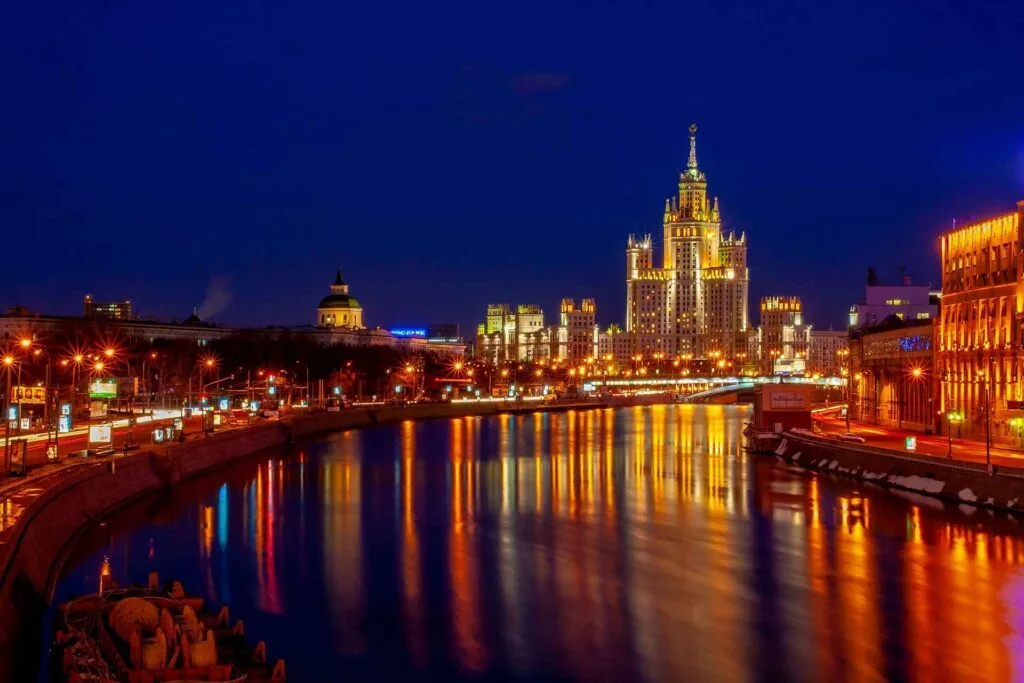
For Architecture Admirers: From medieval cathedrals to Stalinist neo-Gothic skyscrapers to contemporary cutting-edge buildings, Moscow’s architectural diversity is staggering.
For Urban Explorers: A vast, complex metropolis with distinct neighborhoods, underground wonders, river views, and endless discoveries rewards curious wanderers.
For Photographers: Every turn reveals spectacular photo opportunities—golden domes against blue skies, ornate metro stations, grand boulevards, intimate courtyards.
The question isn’t why Moscow is worth visiting—after reading this guide, that answer is clear. The real question is: when will you experience this extraordinary city for yourself?
Start planning your Moscow adventure today and discover why this magnificent capital has become one of the world’s most unforgettable destinations. History, culture, and grandeur await.

